

““Trauma is not what happens to us, but what we hold inside in the absence of an empathetic witness.””
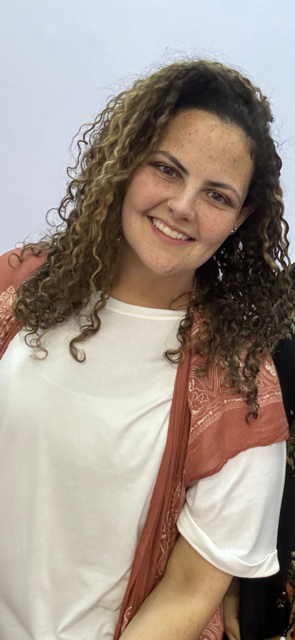
Samantha Farid LCSW, LCADC
You don’t have to be falling apart to know something isn’t working….
Maybe you’ve spent years being the capable one. You function. You show up. You take care of everyone else. You know your patterns. You might even know exactly where they came from.
& yet you’re still stuck in them.
That’s the kind of work that I do.
I spent a decade working (almost) exclusively with substance use and co-occurring clients and was immediately focused on the gap between knowing something intellectually & actually being able to change it because those are two very different things.
You can recognize the pattern and know that something isn’t working and still be stuck in it.
That’s where EMDR came in.
I don't think insight is the finish line.
Understanding yourself matters. But if you understand exactly why you react the way you do and your body still responds like you're in danger, knowing why isn't always enough.
EMDR gives us another way to work with those patterns—one that doesn't require you to spend years talking about the same thing from every possible angle.
Some problems don't need another weekly appointment. They need focused attention.
I focus on EMDR intensives for clients who want to dedicate concentrated time to meaningful therapeutic work. Depending on the person and the goals, that might mean longer sessions, multiple sessions close together, or a multi-day intensive.
Intensives aren't about rushing therapy. They're about creating enough space to go deeper without having to repeatedly stop just as the work is getting somewhere.
Being a therapist is a privilege and I’m so grateful I get to to this work.
With that being said:
I am not the therapist for everyone and I don’t subscribe to “blank slate therapy”.
If you’re looking for someone who will simply listen, nod and help you feel better about the same situation every week, I’m probably not for you.
My approach is active, direct, collaborative, and focused on helping you understand what’s happening in a way that actually allows you to do something about it.
I have ADHD and it’s pretty spicy from time to time.
I was a client of EMDR before I got trained and Intensives are my preferred way to do EMDR.
I think laughter is an important part of therapy and I curse sometimes.
I never learned to ride a bike.
I take my pens and socks incredibly seriously and you won’t catch me with less than a Uniball Zento .7 and le bon campus socks.
I don’t know who decided that being nonchalant about everything was cool, but I am chalant, and I think caring about things is cool.
My mini fridge, coffee bar, and snack tray stay stocked. Therapy is hard, and I’m kind of annoying about it, so it’s the least I could do.
EMDR is like the moldavite of therapy modalities & if that sounds exciting to you, same. If that sounds terrifying to you - also same.
hate talking? cool, let’s just EMDR that sh*t - it’s typically faster and more effective than talking in circles anyway.
My Approach
Authenticity & Honesty
I’m direct because I want you to feel better and part of that is addressing the core of what’s really going on. I don’t ask my clients to use techniques I haven’t used myself either personally or in a clinical training. Therapy should be human.
Flexibility & Neurodiversity Affirming
There is innate shame in feeling “different” or “defective” for not relating to others in the way that we feel we “should”. I strive to help offer some of the science of neurodiversity, why I think it’s actually a super power when understood, and how to lean in and create healthy beliefs. I have ADHD myself and know the struggle of having to function in a neuro-typical world.
Collaboration & Structure
I am straight forward and I will explain the options, pros & cons of each, and together we decide what makes the most sense for you. I have no desire to push an agenda.
Science & Soul
The nature of trauma can create shame and secrecy surrounding mental health, especially in behavioral addictions. I explain the science because it helps demonstrate that you’re not broken. Your brain is doing what it knows to survive.
There is power in showing up authentically and allowing another person to witness who you are. Shame can only exist in the dark - human connection is the light.
Support & Validation
I know I did a lot of talking about how I don’t take BS and am not afraid to be direct, but the flip side to that is I won’t make excuses for the people who hurt you, even when you start to.
Trust & Expectations
Trusting the process (and on some level me as the therapist) and feeling comfortable in the process is imperative. Feeling uncomfortable can actually be a barrier in the deeper work of EMDR. It’s important to manage expectations. I would much rather you realize in a 3 hour session that I’m not the best fit rather than after you’ve made the investment in a 3 day intensive. I’m happy to tap into my network to help you find a therapist that’s a better fit.
What’s the vibe….
Still have questions? Take a look at the FAQ or reach out anytime. If you’re feeling ready, go ahead and schedule a consultation.
-
I work with adults age 18+ that are recovering from attachment wounds like betrayal and emotional / physical neglect/abuse that are noticing impact in their relationships, family dynamics, and self-worth.
What does that look like?
Addictions / Urges & Compulsive Behaviors- Can apply to any maladaptive behavior that we do to “take the edge off” or “cope” with the things we don’t like, not just substances. The DeTUR protocol takes us straight to the urge to decrease the intensity from the source. Feeling State protocol takes us to the positive association between behavior and reward to interrupt the reward loop.
Secrecy & Shame Wounds: The shame we carry from having a “double life” or the legacy of a family of origin that does not match the life you’re built.
First Generation Adults Navigating The Expectations of Two Cultures: It’s hard enough to navigate families - navigating two different cultures can leave us feeling like there’s no way to win. I’m first generation Egyptian and second generation Irish.
CPTSD & Emotionally Immature Family Systems - For those that didn’t get their emotional needs met in childhood.
Estrangement - When we’re contemplating or have gone no or low contact with our family.
Individuals with ADHD / Neurodiversity - It’s challenging to be forced to navigate a system that was not built for the way your brain works.
Women Entrepreneurs / Executives - There’s no way you worked this hard to not feel like you have the life you dreamed of.
Men That Struggle to Recognize Their Emotions - Society built a narrative that keeps men carrying everything alone and then prevents the opportunity to develop the emotional intelligence skills that would ease the burden.
Toxic Relationship Patterns- When you know “something is off” but the alternative seems unbearable.
Infidelity- Both for individuals recovering from betrayal wounds & individuals that want to stop engaging in this behavior.
Intellectualizers That Are “Too Self-Aware” For Therapy- Understanding how/why and “solving” the problem can feel productive, but it doesn’t mean it feels good or actually resolves the pattern.
High Performers That Have A Hard Time Relaxing and Can’t Understand How Others Make it Look So Easy- Have you been told “it’s not that serious” or to “relax and live a little” by those around you and found yourself utterly baffled at what they’re talking about.
-
I offer:
This is the shortest recommended length for EMDR sessions.
Trying to manage a check-in and deep processing in EMDR in less time can slow down progress and make sessions feel rushed.
These are my most popular session type.
They work well for individuals with busy schedules that want the benefits of consistent therapy but have a hard time fitting it in weekly.
These sessions are typically done monthly.
Most clients are able to finish 1-2 targets per session and experience noticeable results between sessions.
This is also great for clients that would like to continue with their primary therapist and are looking add EMDR, but don’t have the time for two appointments every week.
Intensives range from 1-5 days in length and allow for multiple hours of processing on each day.
Clients typically achieve results equivalent to months of weekly sessions in just a few days.
Intensives are an excellent option for a single theme or concern.
-
For Ongoing Clients:
90 Minute Session - $350 / session typically scheduled every 2 weeks.
3 Hour Extended Session - $790 / Session typically scheduled montly.
For EMDR Intensives:
1 Day Intensive - $1800 (weekday)
2 Day Intensive - $3600 (weekday)
3 Day Intensive - $5400 (weekday)
Weekend Intensives can be accommodated on a limited basis for an additional fee.
-
Reach out to schedule a free 30 minute zoom consultation directly on my calendar and we can discuss your goals and if it would be a good fit!



Meet Benny
Benny’s birthday is 10/28/25 and he’s a chihuahua / blue heeler mix and we survived teething, twice.
He was adopted in 2026 from a rescue in Texas at 8 weeks old.
He’s currently in training to be a therapy / service dog so that he can come to the office, but luckily, my dog seems to meet the criteria for generalized anxiety disorder, so it might be a minute.
I didn’t know that I would be the kind of person that would pay for their dog to go on the pumpkin picking field trip at training school despite their lack of hands, and yet here I am.

Education & Advanced Training
Education
BA Psychology - Seton Hall University
MSW - Rutgers University
License & Certification
Licensed Clinical Social Worker - NJ - #44SC05966600
Licensed Clinical Alcohol & Drug Counselor - NJ - #37LC00295000
Licensed Certified Social Worker - Clinical - MD - #35341
Advanced Training
DeTUR: Urge Reduction Protocol for Addictions and Dysfunctional Behaviors – The Accelerated Adaptive Information Processing Model - Arnold “AJ” Popky PhD.
The FLASH Technique - Dr. Philip Manfield PhD.
The Feeling State Addiction Protocol (FSAP) Dr. Robert Miller PhD.
Somatic and Attachment-Focused (S.A.F.E.) EMDR Refresher - Deborah Kennard MS, LLP, - Personal Transformation Institute
EMDR Therapy Protocols for Early Intervention & Ongoing Traumatic Stress-Ignacio Jarero, PhD, EdD.
The Soul of Disassociation - Amy Wagner LMFT, LMHC.
EMDR Intensive Training - Scaling Up
Transforming Trauma Care: Mastering Intensives for Complex Cases - Personal Transformation Institute
Professional Affiliations
EMDRIA - Certified EMDR Therapist
New Jersey Society for Clinical Social Work - Board Member

Experience
Crisis Response for Behavioral Health
Specialty Group Home for Youth in Foster Care
Inpatient Substance Use Facility
Intensive Outpatient Programs
Hospital Partial Hospitalization / Intensive Outpatient Program
Traditional Outpatient